




Mobile SDKs: legacy API removal
As of October 1, 2019, we will release new versions of mobile SDKs to remove legacy APIs.
 2019-09-02
 190027
As of October 1, 2019, we will release new versions of mobile SDKs to remove legacy APIs.
2019-09-02190027
The new version of our mobile SDK uses WebRTC engine for audio/video processing and supports all features available for WebSDK.
2015-03-25134950
VoxImplant developers can easily embed all functionality VoxImplant offers into their native Android applications.
2014-05-04139262
Adding real-time communication functionality into your iOS mobile app has never been easier.
2013-10-27138360
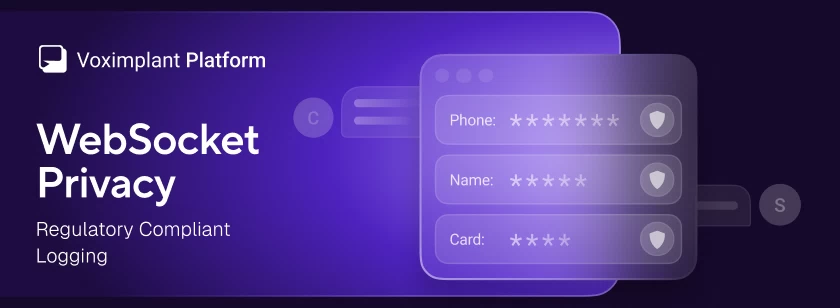
Voximplant has added a WebSocket privacy option that redacts message payloads from logs across all WebSocket-based services – Voice AI connectors and external speech system – and speech control modules
2026-04-23795
The new integration enables instant connection of any Voximplant call to an Ultravox agent, delivering seamless voice-to-voice conversations.
2025-05-2826252
Voximplant now includes a native Grok module that connects any Voximplant call to xAI’s Grok Voice Agent API for real-time, speech-to-speech conversations. With a single VoxEngine scenario, you can interact via audio with Grok over phone numbers, SIP trunks and infrastructure, WhatsApp Business, or WebRTC into Grok — all without building custom media gateways or WebSocket streaming infrastructure.
2026-01-1410987
OpenAI has recently announced GA version of their Realtime API that Voximplant now fully supports
2025-10-1022480
Learn how a Voice AI Orchestration Platform connects LLMs, STT/TTS, turn‑taking, and telephony (PSTN, SIP, WebRTC) to build reliable real‑time voice agents. See benefits, architecture, and how Voximplant helps.
2025-10-277313
Voximplant now includes a native MCP Client for VoxEngine, giving developers direct connectivity to any MCP server and full control over every tool call
2026-06-0340
Voximplant has added Secrets, a dedicated credential store for API keys, tokens, and other sensitive values that VoxEngine scenarios need at runtime
2026-04-27604
Voximplant now includes a native Cartesia Line / Agents connector that connects any Voximplant call to a Cartesia Line voice agent for real-time, speech-to-speech conversations—over PSTN, SIP, WebRTC, or WhatsApp Business Calling—without building custom media gateways or WebSocket streaming infrastructure.
2026-02-116297